
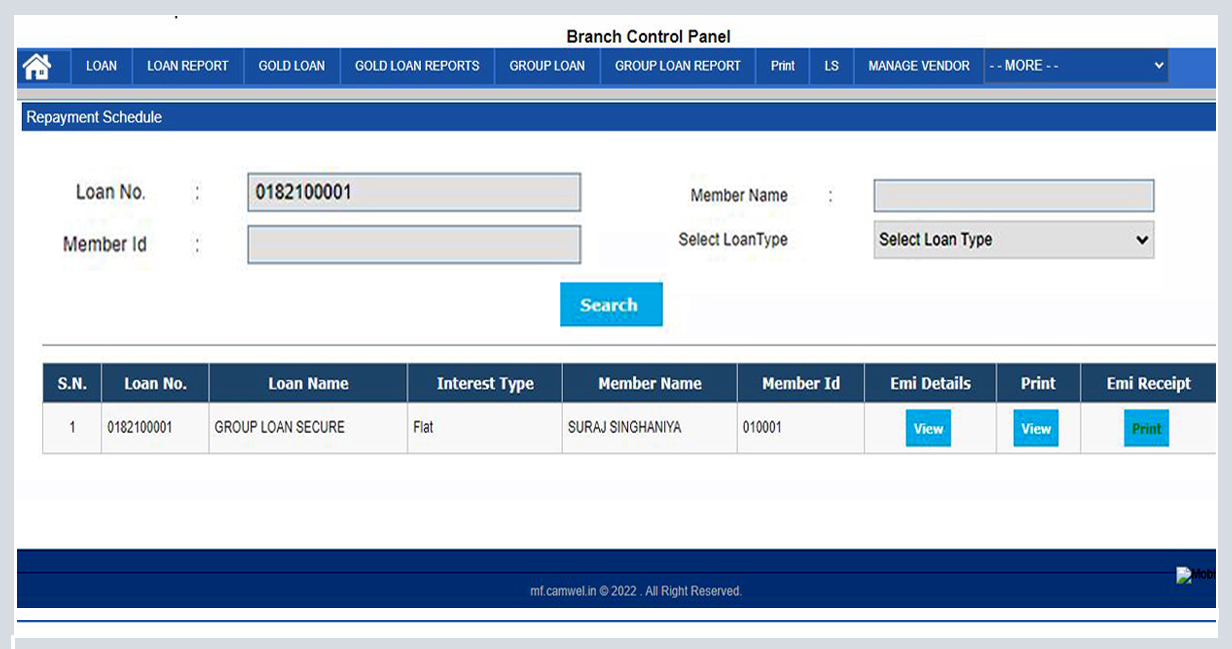
What is Private Limited Company?
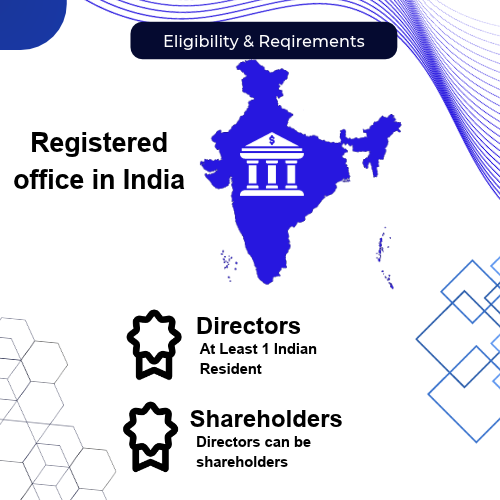
A private limited company is that which has members between 2 to 200 in number without any limit for paid-up share capital. The number of directors can be between 2 to 15, making it a closed system that offers distinct advantages in decision-making and equity sharing. It is an ideal framework for establishing a business with family and friends due to limited liability and protection against outside influence.
If you are interested in registering your business as a private limited company, our filing tools make registration straightforward and transparent, avoiding documentation bottlenecks. Operating under the Companies Act, 2013, our services strictly adhere to the guidelines established by the Ministry of Corporate Affairs (MCA) and are processed via the Central Registration Centre (CRC).
Once you partner with us, our specialists handle every step of your incorporation. Backed by years of experience, we have successfully assisted businesses across India and internationally.

What Is Trademark Registration?
In India, the Trademark Act,1999 permits you to register a trademark. It allows for exclusive ownership rights and prohibits others from using the mark, favoring the registered mark's owner. Once a trademark is registered, the "TM" symbol can be used with the applicant and the brand. To protect the brand name, trademark registration in India is essential. It is typically best to seek trademark registration under the supervision of a professional, as the process entails several steps and needs constant government follow-up.
Trademark Type
Product marks, service marks, collective marks, certification marks, shape marks, sound marks, and pattern marks are all forms of trademarks that can be registered. Despite the fact that there are various trademarks, their objective is the same: to allow consumers to identify goods and services produced by certain manufacturers or service providers. Let's look at the different types of trademark registrations available in India.- Product Mark
- Service Mark
- Collective Mark
- Certification Mark
- Shape Mark
- Pattern Mark
- Sound Mark
Benefits of Trademark Registration
There are numerous reasons to register a trademark, but the majority of them are required for all businesses and ambitious entrepreneurs because it serves as a valuable asset. Obtaining a trademark registration and utilizing the services has numerous advantages. Here are a few benefits. Intellectual Property Protection: The legal protection provided by trademark registration is against the misuse or copying of the company's name or registered logo. The trademark owner acquires legal ownership of the trademark, which can be enforced in any court. When a trademark is registered, the owner gains nationwide possession of the mark. Legal Remedies: The owner of a trademark can recover up to triple damages from the offender if the trademark is registered in India. The owner is presumed to be the rightful owner of the trademark. When a trademark is registered, the owner gains the ability to sue anyone who is misusing the mark in any court. Unregistered trademarks, on the other hand, are subject to legal action. . Powerful Deterrent:A trademark owner obtains the ability to publicly display his or her brand as a registered trademark, alerting others and eliminating the defence of innocent infringement. Once a trademark is registered, it will appear in search reports, preventing other applicants from pursuing the registration of the same or similar mark.
Eligibility for Trademark Registration
Trademark registrations are prevalently used to protect unique brands, slogans, or invented terms. Individuals, corporations, and non-profit organization can all file for trademark registration in India. However, each class of person or entity has its own set of requirements when it comes to filing a trademark application. In India, the following are eligible for trademark registration.- An individual
- Proprietorship Firm
- Partnership Firm
- Limited Liability Partnership/LLP
- Trust or Society
Process of Trademark Registration
The trademark registration application can be filed with the Trademark Registrar after the trademark search is completed. However, the application must be made in the prescribed manner and preceded by the applicable fees. The application can be made online or at any of the state's five Trademark Registrar's offices. To register a trademark online, go to the IndiaFilings website.- Logo or the Trademark
- Trademark used Since the date
- Name and address of the Trademark owner
- Description of the goods or services
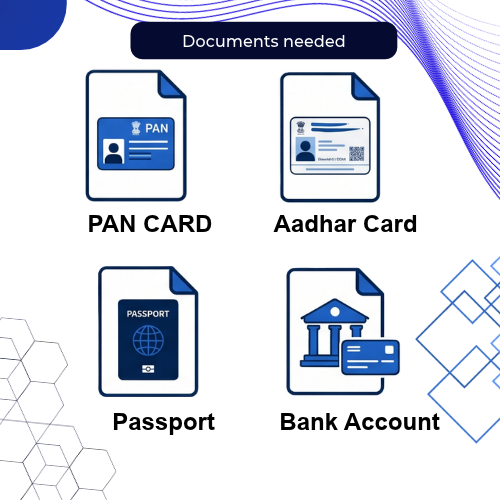
Document Required
- Aadhaar card
- PAN Card
- MSME Certificate
- Address proof
- Form-48 Signed
- Logo
What Is Shop Establishment Registration?
Shop Establishment Registration is a mandatory legal compliance for businesses operating under a physical or online setup in India. It falls under the purview of the Shop and Establishment Act, which regulates the work conditions, employee rights, wages, and other operational aspects of commercial establishments.
Why is Shop Establishment Registration Important?
- 1. Legal Compliance: Every shop, commercial establishment, and service-oriented business must register under this act to operate legally.
- 2. Establishing Credibility: A registered business is more trustworthy to customers and employees.
- 3. Avoiding Penalties: Non-registration can lead to fines or legal complications.
- 4. Bank Account Setup: It’s often required to open a current bank account in the business’s name.
- 5. Employee Welfare: Ensures compliance with labor laws for fair wages, working hours, and other employee benefits.
Benefits of Shop Establishment Registration
- 1. Legal Protection: Safeguards businesses from labor law disputes and penalties.
- 2. Employee Confidence: Demonstrates a commitment to fair labor practices.
- 3. Ease of Business: Enables access to loans, financial assistance, and government schemes.
- 4. Market Credibility: Builds a strong brand reputation among customers and partners.
What Is TAX Filing Services
Filing taxes can be a daunting task for businesses, regardless of size or structure. At CAPLUS, we specialize in providing comprehensive business tax filing services to ensure your company stays compliant with tax regulations. Whether you operate as a proprietorship, partnership, LLP, or company, our team is here to simplify the process and save you valuable time and resources.
Benefits of Timely Business Tax Filing
- Avoid Penalties: Filing your taxes on time helps you avoid fines and interest charges.
- Legal Compliance: Stay in line with government regulations and maintain a clean financial record.
- Financial Planning: Accurate tax filing provides a clear picture of your business’s financial health.
- Loan Approvals: Proper tax records make it easier to secure business loans or investments.
- Peace of Mind: With CAPLUS managing your filings, you can focus on growing your business.
ITR-1 Return Filing
Income tax return filing for an individual with salary income of less than Rs.5 lakhs annual. Income is from salary, one house property, family pension income, agricultural income (up to ₹5000/-), and other sources, which include: o Interest from Savings Accounts.
Eligibility for filing ITR-1 Form
ITR-1 Sahaj Form is for individuals that have income up to Rs.50 lakh lakhs. The individuals earning income from the following sources can file ITR 1 Sahaj Form:- Salaried person- Salary refers to the remuneration or consideration that a person receives for the services he or she has to render under the contract of employment. The Income Tax Act,1961 includes the following under the salary income
- Wages
- Fee, prerequisites, commission, profits besides or in lieu id the salary or wages
- Transferred balance in recognized provident fund
- Annual accretion to the recognized provident fund
- Central Government contribution or an employer contribution to Pension account as mentioned in Section 80 CCD of the Income Tax Act.
- One house property: If the taxpayer is the owner of a property from which he or she is earning rent, the rent proceeds become taxable.
- However, if the taxpayer is using the owner of a property from which he or she is earning rent, the rent proceeds become taxable. However, if the taxpayer is using the property for running some business or profession the same would be taxable under the heading “Income from business or profession”.
- Other sources (does not include income earned from winning lottery or racehorses)
- Agricultural income (Upto to Rs. 5000)
- Annual accretion to the recognized provident fund
Section-8 Company Registration
A Section-8 Company is a not-for-profit organization registered under the Companies Act, 2013. Its primary purpose is to promote charitable objectives such as social welfare, education, art, or the environment. CAPLUS, specializes in guiding clients through the process of registering a Section-8 Company efficiently and compliantly.
What is a Section-8 Company?
A Section-8 Company is structured to encourage non-profit initiatives. It enjoys special privileges under the Companies Act, including exemptions from certain procedural requirements. Unlike other company types, profits generated by a Section-8 Company are reinvested to achieve its goals rather than distributed as dividends.
Key Features of a Section-8 Company
- Purpose-Driven: Focused on promoting charity, education, health, or other societal benefits.
- Limited Liability : Members have limited liability based on their contribution.
- No Dividend Distribution : Profits are reinvested for the organization’s objectives.
- Tax Benefits : Eligible for various tax exemptions under Indian tax laws.
Taxation
Any not-for-profit organization or an NGO can register itself as a trust by executing a trust deed or as a society under the Registrar of Societies, or as a not-for-profit company under Section 8 Company of the Companies Act, 2013. A Section 8 Company is a special entity and the same as a Section 25 company under The Old Companies Act, 1956. Under The New Companies Act 2013, Section 25 Companies have now been renamed as Section 8 Companies. As per section 8(1a, 1b, 1c) of the Companies Act, 2013, “A Section 8 company can be established for the promotion of commerce, art, science, sports, education, research, social welfare, religion, charity, protection of environment or any such other object”. The Act further clarifies that the Section 8 companies can pursue the above motives, subject to the condition that it “Intends to apply the profits, if any, or other income in promoting its objects and intends to prohibit the payment of any dividend to its members”. In simpler words, a Section 8 Company has to endorse a public cause and the proceeds created by the entity have to be solely used to support the stated public cause(s).
Documents need for Registration
- Consent and Declaration by first Directors in Form DIR-2
- Self-declaration by first subscribers in Form INC-9
- PAN card of first directors and subscribers
- Aadhar card of first directors and subscribers
- Proof of Registered office like Sale Deed/Lease Deed/Rent Agreement etc
- Latest Utility Bill of Registered office like Electricity Bill
- NOC of owner if registered office is taken on rent/lease
- Name Approval Letter received from CRC
ISO Certification
Nidhi Companies are special business entities in India that are created to inculcate the habit of thrifting and saving between the company’s members. Nidhi companies are permitted to make borrowings from their members and also lend capital to their members. Hence, the amount that is contributed to a Nidhi company comes only from the members or stakeholders. Therefore, Nidhi companies are mainly promoted for savings, especially among women from the middle class and poor backgrounds. It creates a legal scape for some sense of liability to conduct official business rather than resort to unofficial lending. Thus, Nidhi Companies also act as a conduit to promote the eradication of black money circulation for internal loans and lending. Registering a Nidhi Company in compliance with all the required laws is simple. We ease your job by completing all formalities and documentation work as well as applying to the MCA in accordance with the corresponding guidelines.
Eligibility
- Minimum number of members: 7 (3 members should be the designated directors)
- Minimum equity share capital: Rs. 10 lakhs
- Must have limited company status under Company Act, 2013
- Mandatory inclusion of the Company's object in MOA reflects its intention to foster the habit of thrift and savings among the members.
Documents need for Registration
- Directors Identification Number, i.e., DIN
- PAN number of the proposed directors and members
- Residential proof and address proof of the proposed directors and members
- Photographs of the proposed directors and members
- Identification Documents like Aadhaar card
- Registered business place proof such as lease or rent agreement
- Ownership proof of the business place in case the premises are owned
- NOC if required
- MOA i.e., Memorandum of Association
- AOA, i.e., Article of Association
NGO
The Companies Act, 2013 defines a Producer as, “Any person engaged in any activity associated with or relatable to any primary produce”. Here the term Produce means, “Things that have been produced or grown, especially by farming”. A Producer Company is a special corporate entity that has the object that is one, or all of the following: Production, harvesting, procurement, grading, pooling, handling, marketing, selling, export of primary produce of the shareholders, or import of goods or services for their benefit.
Eligibility
A Producer Company gets registered as a Private Limited Company, and hence, the entire process of registering a Producer Company is similar to that of a Private Limited Company. The application is filled out by any director of the Company, and submitted to the Registrar of Companies, who verifies the details furnished in the application and the documents attached with it. Once the verification of the application is complete, the ROC shall issue the Certificate of incorporation in the name of the company.
Documents need for Registration
- Passport-size coloured photograph
- PAN Card
- Proof of Identity
- Proof of Registered
- Identification Documents like Aadhaar card
- Proof of Producer activity
- Ownership proof of the business place in case the premises are owned
- Specimen Signature of Directors
- Signed Subscriber Sheet